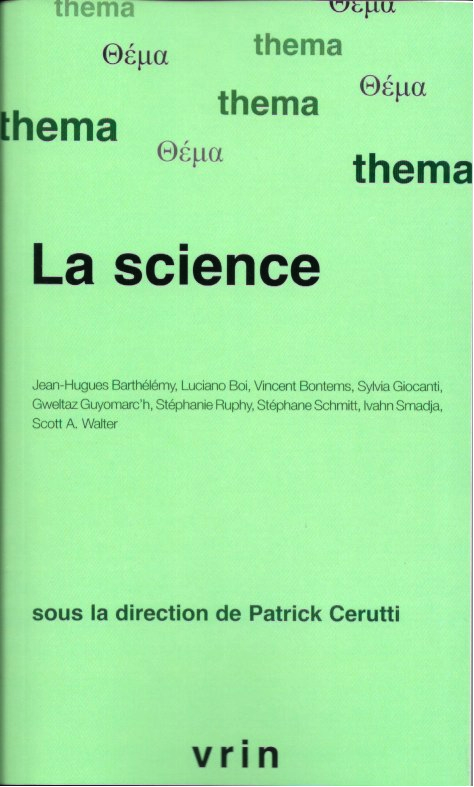
@incollection{WalS2026,author={Walter, Scott A.},title={{L'aberration stellaire et la formule de Fresnel face \`a la relativit\'e}},booktitle={{La science}},editor={Cerutti, Patrick},publisher={Vrin},address={Paris},pages={123--159},year={2026},}
BJHM
Rossana Tazzioli, From Differential Geometry to Relativity: Levi-Civita’s Lectures on the Absolute Differential Calculus, 1925–1928, EMS Press, 2025
Scott A. Walter
British Journal for the History of Mathematics, 2026
@article{WalS2026a,author={Walter, Scott A.},title={{Rossana Tazzioli, From Differential Geometry to Relativity: Levi-Civita's Lectures on the Absolute Differential Calculus, 1925--1928, EMS Press, 2025}},journal={British Journal for the History of Mathematics},volume={41},number={2},pages={245--248},url={https://doi.org/10.1080/26375451.2026.2677295},doi={10.1080/26375451.2026.2677295},year={2026},}
2025
MR
Tobias Schütz, Einstein at Work on Unified Field Theory: The Five-Dimensional Einstein-Bergmann Approach
@article{WalS2025,author={Walter, Scott A.},title={{Tobias Sch\"utz, Einstein at Work on Unified Field Theory: The Five-Dimensional Einstein-Bergmann Approach}},journal={Mathematical Reviews},number={MR4759174},url={https://mathscinet.ams.org/mathscinet/relay-station?mr=4759174},mr={MR4759174},year={2025},}
2024
Describing and understanding the world: from probability and statistics to field theory
Scott A. Walter
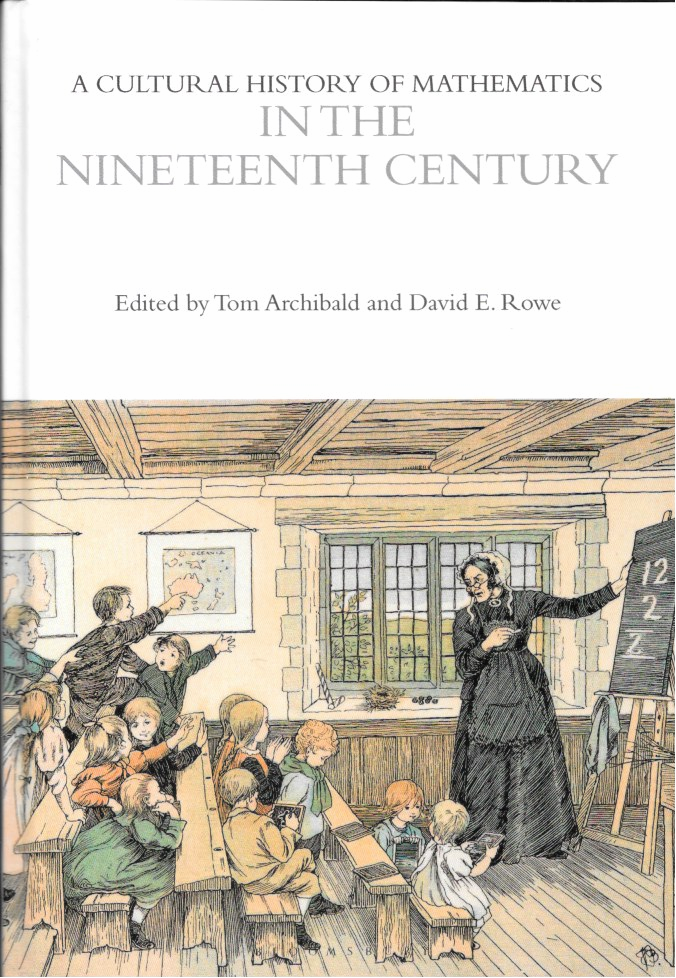
In A Cultural History of Mathematics, Volume 5: A Cultural History of Mathematics in the Nineteenth Century, 2024
@incollection{WalS2024,author={Walter, Scott A.},title={{Describing and understanding the world: from probability and statistics to field theory}},booktitle={{A Cultural History of Mathematics, Volume 5: A Cultural History of Mathematics in the Nineteenth Century}},editor={Archibald, Tom and Rowe, David E.},publisher={Bloomsbury},address={London},pages={161--191},url={http://scottwalter.free.fr/papers/2021-bchm5-walter.html},doi={10.5040/9781350294936.ch-005},year={2024},}
MR
Marco Giovanelli, Appearance and reality: Einstein and the early debate on the reality of length contraction
@article{WalS2024a,author={Walter, Scott A.},title={{Marco Giovanelli, Appearance and reality: Einstein and the early debate on the reality of length contraction}},journal={Mathematical Reviews},number={MR4666605},url={https://mathscinet.ams.org/mathscinet/relay-station?mr=4666605},mr={MR4666605},year={2024},}
MR
Loı̈c Petitgirard, The mathematics of nonlinear oscillations in the 1920s: a decade of trials and convergence? Examples of the work of Nicolai Minorsky
@article{WalS2024c,author={Walter, Scott A.},title={{Lo\"{\i}c Petitgirard, The mathematics of nonlinear oscillations in the 1920s: a decade of trials and convergence? Examples of the work of Nicolai Minorsky}},journal={Mathematical Reviews},number={MR4240592},url={https://mathscinet.ams.org/mathscinet/relay-station?mr=4240592},mr={MR4240592},year={2024},}
La correspondance entre Henri Poincaré et les mathématiciens
@book{hp2024cp,editor={Nabonnand, Philippe and Bruneau, Olivier and Henry, Philippe and Mawhin, Jean and Volkert, Klaus and Walter, Scott A.},title={{La correspondance entre Henri Poincaré et les mathématiciens}},publisher={Birkhäuser},address={Cham},doi={10.1007/978-3-7643-8288-9},year={2024},}
2023
MR
Jean-Philippe Martinez, The Fock-Infeld dispute: an illustration of the renaissance of general relativity in the Soviet Union
@article{WalS2023,author={Walter, Scott A.},title={{Jean-Philippe Martinez, The Fock-Infeld dispute: an illustration of the renaissance of general relativity in the Soviet Union}},journal={Mathematical Reviews},number={MR4305121},url={https://mathscinet.ams.org/mathscinet/addclip.html?id=4305121},year={2023},}
MR
Alessandro Rosa, An episodic history of the staircased iteration diagram
@article{WalS2023a,author={Walter, Scott A.},title={{Alessandro Rosa, An episodic history of the staircased iteration diagram}},journal={Mathematical Reviews},number={MR4467503},url={https://mathscinet.ams.org/mathscinet/addclip.html?id=4467503},year={2023},}
Philos. Sci.
The Poincaré pear and Poincaré-Darwin fission theory in astrophysics, 1885–1901
In the early 1880s, Henri Poincaré discovered a new equilibrium figure for uniformly-rotating fluid masses – the pear, or piriform figure – and speculated that in certain circumstances the pear splits into two unequal parts, and provides thereby a model for the origin of binary stars. The contemporary emergence of photometric and spectroscopic studies of variable stars fueled the first models of eclipsing binaries, and provided empirical support for a realist view of equilibrium figures – including the pear – in the cosmic realm. The paper reviews astrophysical interpretation of the Poincaré pear and the Poincaré-Darwin fission hypothesis with respect to research on variable stars from 1885 to 1901.
@article{WalS2023b,author={Walter, Scott A.},title={{The Poincar\'e pear and Poincar\'e-Darwin fission theory in astrophysics, 1885--1901}},journal={Philosophia Scienti\ae{}},volume={27},number={3},url={https://journals.openedition.org/philosophiascientiae/4178},doi={10.4000/philosophiascientiae.4178},pages={159--187},year={2023},}
MR
Javier Anta, Information, meaning and physics: the intellectual evolution of the English School of Information Theory during 1946–1956
@article{WalS2023c,author={Walter, Scott A.},title={{Javier Anta, Information, meaning and physics: the intellectual evolution of the English School of Information Theory during 1946--1956}},journal={Mathematical Reviews},number={MR4556943},url={https://mathscinet.ams.org/mathscinet/addclip.html?id=4556943},mr={MR4556943},year={2023},}
RHS
Anke te Heesen, Revolutionäre im Interview: Thomas Kuhn, Quantenphysik und Oral History (Berlin, Verlag Klaus Wagenbach, 2022)
@article{WalS2023d,author={Walter, Scott A.},title={{Anke te Heesen, Revolution\"are im Interview: Thomas Kuhn, Quantenphysik und Oral History (Berlin, Verlag Klaus Wagenbach, 2022)}},journal={Revue d'histoire des sciences},volume={76},number={2},url={https://www.cairn.info/revue-d-histoire-des-sciences-2023-2-page-498.htm},doi={10.3917/rhs.762.0498},pages={498--501},year={2023},}
2022
MR
Roberto Lalli, Riaz Howey and Dirk Wintergrün, The socio-epistemic networks of general relativity, 1925–1970
@article{WalS2022a,author={Walter, Scott A.},title={{Roberto Lalli, Riaz Howey and Dirk Wintergr\"un, The socio-epistemic networks of general relativity, 1925--1970}},journal={Mathematical Reviews},number={MR4305119},url={https://mathscinet.ams.org/mathscinet/addclip.html?id=4305119},year={2022},}
MR
Gerard Gilmore and Gudrun Tausch-Pebody, The 1919 eclipse results that verified general relativity and their later detractors: a story re-told
@article{WalS2022b,author={Walter, Scott A.},title={{Gerard Gilmore and Gudrun Tausch-Pebody, The 1919 eclipse results that verified general relativity and their later detractors: a story re-told}},journal={Mathematical Reviews},number={MR4409390},url={https://mathscinet.ams.org/mathscinet/addclip.html?id=4409390},mr={MR4409390},year={2022},}
2020
Isis
Claudia Graf-Grossmann, Marcel Grossmann: For the Love of Mathematics (Springer, 2019)
@article{WalS2020,author={Walter, Scott A.},title={{Claudia Graf-Grossmann, Marcel Grossmann: For the Love of Mathematics (Springer, 2019)}},journal={Isis},volume={111},number={2},url={http://scottwalter.free.fr/papers/2020-isis-graf-grossmann.html},doi={10.1086/707843},pages={194--195},year={2020},}
Centaurus
Roberto Lalli, Building the General Relativity and Gravitation Community During the Cold War (Springer 2017)
@article{WalS2020a,author={Walter, Scott A.},title={{Roberto Lalli, Building the General Relativity and Gravitation Community During the Cold War (Springer 2017)}},journal={Centaurus},volume={61},number={4},url={http://scottwalter.free.fr/papers/2019-centaurus-walter.html},doi={10.1111/1600-0498.12230},pages={451--453},year={2020},}
Technological power in the post-sacrificial world: a conversation with René Girard
Scott A. Walter
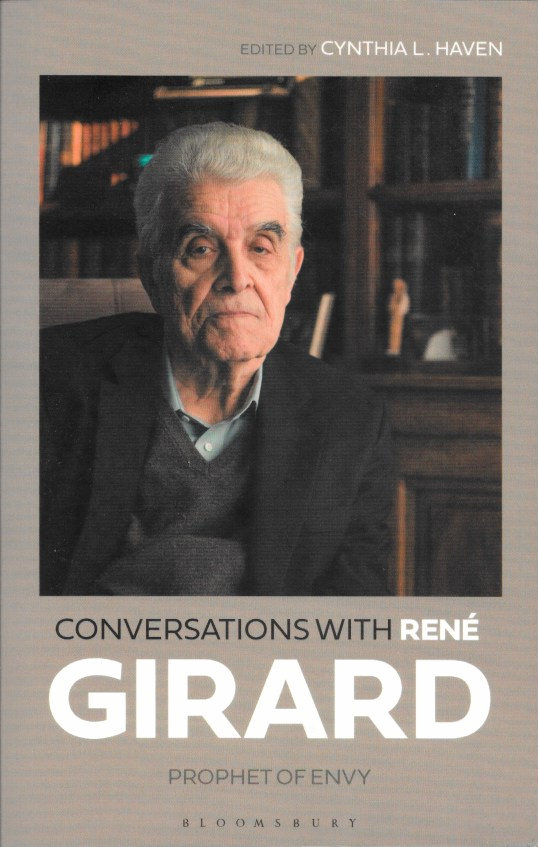
In Conversations with René Girard: Prophet of Envy, 2020
@incollection{WalS2020c,author={Walter, Scott A.},title={{Technological power in the post-sacrificial world: a conversation with Ren\'e Girard}},booktitle={{Conversations with Ren\'e Girard: Prophet of Envy}},editor={Haven, Cynthia L.},publisher={Bloomsbury Academic},address={London},pages={21--31},year={2020},}
2018
Figures of light in the early history of relativity (1905–1914)
Scott A. Walter
In Beyond Einstein: Perspectives on Geometry, Gravitation, and Cosmology in the Twentieth Century, 2018
Albert Einstein’s bold assertion of the form-invariance of the equation of a spherical light wave with respect to inertial frames of reference (1905) became, in the space of six years, the preferred foundation of his theory of relativity. Early on, however, Einstein’s universal light-sphere invariance was challenged on epistemological grounds by Henri Poincaré, who promoted an alternative demonstration of the foundations of relativity theory based on the notion of a light ellipsoid. A third figure of light, Hermann Minkowski’s lightcone also provided a new means of envisioning the foundations of relativity. Drawing in part on archival sources, this paper shows how an informal, international group of physicists, mathematicians, and engineers, including Einstein, Paul Langevin, Poincaré, Hermann Minkowski, Ebenezer Cunningham, Harry Bateman, Otto Berg, Max Planck, Max Laue, A. A. Robb, and Ludwig Silberstein, employed figures of light during the formative years of relativity theory in their discovery of the salient features of the relativistic worldview.
@incollection{WalS2018,author={Walter, Scott A.},title={{Figures of light in the early history of relativity (1905--1914)}},booktitle={{Beyond Einstein: Perspectives on Geometry, Gravitation, and Cosmology in the Twentieth Century}},editor={Rowe, David E. and Sauer, Tilman and Walter, Scott A.},series={Einstein Studies},volume={14},publisher={Birkh\"auser},address={New York},pages={3--50},url={http://scottwalter.free.fr/papers/2018-be-walter.html},doi={10.1007/978-1-4939-7708-6_1},mr={MR3753148},year={2018},}
Ether and electrons in relativity theory (1900–1911)
Scott A. Walter
In Ether and Modernity: The Recalcitrance of an Epistemic Object in the Early Twentieth Century, 2018
This chapter discusses the roles of ether and electrons in relativity theory. One of the most radical moves made by Albert Einstein was to dismiss the ether from electrodynamics. His fellow physicists felt challenged by Einstein’s view, and they came up with a variety of responses, ranging from enthusiastic approval, to dismissive rejection. Among the naysayers were the electron theorists, who were unanimous in their affirmation of the ether, even if they agreed with other aspects of Einstein’s theory of relativity. The eventual success of the latter theory (circa 1911) owed much to Hermann Minkowski’s idea of four-dimensional spacetime, which was portrayed as a conceptual substitute of sorts for the ether.
@incollection{WalS2018a,author={Walter, Scott A.},title={{Ether and electrons in relativity theory (1900--1911)}},booktitle={{Ether and Modernity: The Recalcitrance of an Epistemic Object in the Early Twentieth Century}},editor={Navarro, Jaume},publisher={Oxford University Press},address={Oxford},pages={67--87},url={http://scottwalter.free.fr/papers/2018-oup-walter.html},doi={10.1093/oso/9780198797258.003.0005},year={2018},}
Bol. SPM
The mathematization of cosmology from Kelvin to Einstein
Scott A. Walter
Suplemento do Boletim da Sociedade Portuguesa de Matemática, 2018
@article{WalS2018b,author={Walter, Scott A.},title={{The mathematization of cosmology from Kelvin to Einstein}},journal={Suplemento do Boletim da Sociedade Portuguesa de Matem\'atica},number={76},url={http://scottwalter.free.fr/papers/2018-suplbspm-walter.html},pages={171--173},year={2018},}
Poincaré-week in Göttingen, in light of the Hilbert-Poincaré correspondence of 1908–1909
Scott A. Walter
In Mathematical Correspondences and Critical Editions, 2018
The two greatest mathematicians of the early twentieth century, David Hilbert and Henri Poincaré transformed the mathematics of their time. Their personal interaction was infrequent, until Hilbert invited Poincaré to deliver the first Wolfskehl Lectures in Göttingen in the spring of 1909. A correspondence ensued, which fixed the content and timing of the lecture series. A close reading of the exchange throws light on what Hilbert wanted Poincaré to talk about, and on what Poincaré wanted to present to Hilbert and his colleagues. To answer the latter question, reference is made to the published version of Poincaré’s six talks, with a focus on two of them, concerning the propagation of Hertzian waves, and the theory of relativity.
@incollection{WalS2018c,author={Walter, Scott A.},title={{Poincar\'e-week in G\"ottingen, in light of the Hilbert-Poincar\'e correspondence of 1908--1909}},booktitle={{Mathematical Correspondences and Critical Editions}},editor={Borgato, Maria Teresa and Neuenschwander, Erwin and Passeron, Ir\`ene},publisher={Springer},address={Cham},pages={297--310},url={http://scottwalter.free.fr/papers/2018-mcce-walter.html},doi={10.1007/978-3-319-73577-1_15},mr={MR4174737},year={2018},}
Beyond Einstein: Perspectives on Geometry, Gravitation, and Cosmology in the Twentieth Century
@book{RowD2018,editor={Rowe, David E. and Sauer, Tilman and Walter, Scott A.},title={{Beyond Einstein: Perspectives on Geometry, Gravitation, and Cosmology in the Twentieth Century}},publisher={Birkh\"auser},address={New York},doi={10.1007/978-1-4939-7708-6},year={2018},}
2017
Historia Math.
Henri Poincaré’s life, science, and life in science
@article{WalS2017,author={Walter, Scott A.},title={{Henri Poincar\'e's life, science, and life in science}},journal={Historia Mathematica},volume={44},number={4},url={http://scottwalter.free.fr/papers/2017-histmath-walter.html},doi={10.1016/j.hm.2017.05.001},pages={425--435},year={2017},}
2016
La correspondance entre Henri Poincaré, les astronomes, et les géodésiens
@book{hp2016cp,editor={Walter, Scott A.},title={{La correspondance entre Henri Poincaré, les astronomes, et les géodésiens}},publisher={Birkhäuser},address={Basel},doi={10.1007/978-3-7643-8293-3},year={2016},}
@article{WalS2015,author={Walter, Scott A.},title={{Mathematical Milky Way models from Kelvin and Kapteyn to Poincar\'e, Jeans and Einstein}},journal={Oberwolfach Reports},volume={12},number={4},url={https://www.mfo.de/document/1544a/OWR_2015_47.pdf},doi={10.4171/OWR/2015/47},pages={2821--2822},year={2015},}
The idea of spacetime investigated in this chapter, with a view toward understanding its immediate sources and development, is the one formulated and proposed by Hermann Minkowski in 1908. Until recently, the principle source used to form historical narratives of Minkowski’s discovery of spacetime has been Minkowski’s own discovery account, outlined in the lecture he delivered in Cologne, entitled “Space and time”. Minkowski’s lecture is usually considered as a bona fide first-person narrative of lived events. According to this received view, spacetime was a natural outgrowth of Felix Klein’s successful project to promote the study of geometries via their characteristic groups of transformations. Or as Minkowski expressed the same basic thought himself, the theory of relativity discovered by the physicists in 1905 could just as well have been proposed by some late-nineteenth-century mathematician, by simply reflecting upon the groups of transformations that left invariant the form of the equation of a propagating light wave. Minkowski’s publications and research notes provide a contrasting picture of the discovery of spacetime, in which group theory plays no direct part.
@incollection{WalS2014,author={Walter, Scott A.},title={{The historical origins of spacetime}},booktitle={{Springer Handbook of Spacetime}},editor={Ashtekar, Abhay and Petkov, Vesselin},publisher={Springer},address={Berlin},pages={27--38},url={http://scottwalter.free.fr/papers/2014-sthandbook-walter.html},doi={10.1007/978-3-642-41992-8},mr={MR3525014},year={2014},}
SHPMP
Poincaré on clocks in motion
Scott A. Walter
Studies in History and Philosophy of Modern Physics, 2014
Recently-discovered manuscripts throw new light on Poincaré’s discovery of the Lorentz group, and his ether-based interpretation of the Lorentz transformation. At first, Poincaré postulated longitudinal contraction of bodies in motion with respect to the ether, and ignored time deformation. In April, 1909, he acknowledged temporal deformation due to translation, obtaining thereby a theory of relativity more compatible with those of Einstein and Minkowski.
@article{WalS2014a,author={Walter, Scott A.},title={{Poincar\'e on clocks in motion}},journal={Studies in History and Philosophy of Modern Physics},volume={47},number={1},url={http://scottwalter.free.fr/papers/2014-shpmp-walter.html},doi={10.1016/j.shpsb.2014.01.003},mr={MR3244606},pages={131--141},year={2014},}
Let. INSHS
L’histoire des sciences pour les robots : les humanités numériques aux Archives Henri Poincaré
@article{WalS2014c,author={Walter, Scott A.},title={{L'histoire des sciences pour les robots : les humanit\'es num\'eriques aux Archives Henri Poincar\'e}},journal={Lettre de l'INSHS},volume={29},url={https://www.cnrs.fr/inshs/Lettres-information-INSHS/lettre_infoinshs_29.pdf},pages={26--28},year={2014},}
2011
Henri Poincaré, theoretical physics and relativity theory in Paris
Scott A. Walter
In Mathematics Meets Physics: A Contribution to Their Interaction in the 19th and the First Half of the 20th Century, 2011
The outlines of an alternative account of French contributions to relativity during the years from 1905 to 1912 are drawn in this paper. Poincaré’s intellectual and institutional leadership in French physics at the turn of the twentieth century is reviewed, and related to the emergence of Paul Langevin as his successor. Drawing on quantitative data and previously-unexploited manuscripts from Parisian archives, the paper compares the fate in France of Poincaré’s theory of relativity to that of the Einstein-Minkowski theory of relativity championed by Langevin, and links these events to Langevin’s rise to leadership of French theoretical physics.
@incollection{WalS2011,author={Walter, Scott A.},title={{Henri Poincar\'e, theoretical physics and relativity theory in Paris}},booktitle={{Mathematics Meets Physics: A Contribution to Their Interaction in the 19th and the First Half of the 20th Century}},editor={Schlote, Karl-Heinz and Schneider, Martina},publisher={Harri Deutsch},address={Frankfurt am Main},pages={213--239},url={http://scottwalter.free.fr/papers/2011-schlote-walter.html},mr={MR3098101},year={2011},}
2010
Moritz Schlick’s reading of Poincaré’s theory of relativity
Scott A. Walter
In Moritz Schlick: Ursprünge und Entwicklungen seines Denkens, 2010
My discussion of Schlick’s view of Poincaré’s theory begins with a review of the difference between Einstein’s and Poincaré’s theories, that turns on the form of light-waves as judged by observers in inertial frames of reference. I summarize the evolution of Poincaré’s philosophy of geometry in the early years of relativity theory, which Schlick ignored throughout his life, and in the second section of the paper, I recall Schlick’s discussion of Poincaré’s views on the relativity of space, in which Schlick focused on similitude relations, at the expense of relations of covariance. I then take up Lindemann’s preface to the English translation of Schlick’s Raum und Zeit in der gegenwärtigen Physik, where the issue of the shape of light-shells in inertial frames is raised. It is this very issue, I suggest, which distinguished most sharply Poincaré’s theory of relativity from Einstein’s special theory of relativity, and may have prompted Schlick to move away from Poincaré’s neo-Kantian conventionalism towards an Einsteinian empiricism with constitutive principles.
@incollection{WalS2010,author={Walter, Scott A.},title={{Moritz Schlick's reading of Poincar\'e's theory of relativity}},booktitle={{Moritz Schlick: Urspr\"unge und Entwicklungen seines Denkens}},editor={Engler, Fynn Ole and Iven, Mathias},series={Schlickiana},volume={5},publisher={Parerga Verlag},address={Berlin},pages={191--203},url={http://scottwalter.free.fr/papers/2010-schlick-walter.html},year={2010},}
Minkowski’s modern world
Scott A. Walter
In Minkowski Spacetime: A Hundred Years Later, 2010
In this paper I want to suggest that much of the excitement generated by Minkowski’s Cologne lecture among scientists and philosophers arose from an idea that was scandalous when announced on September 21, 1908, but which was soon assimilated, first by theorists and then by the scientific community at large: Euclidean geometry was no longer adequate to the task of describing physical reality, and had to be replaced by the geometry of a four-dimensional space Minkowski called the “world.” Such an affirmation engaged implicitly with the Riemann-Helmholtz-Lie-Poincaré problem of space, and flatly contradicted Poincaré’s conventionalist philosophy, whereby the geometry assigned to physical space is a matter of choice, not necessity. The first section sketches the background to physical geometry at the time of Minkowski’s first lecture on relativity in 1907, and in the second section, the emergence and evolution of the concept of the “world” in Minkowski’s writings is discussed, along with a reconstruction of the related discovery of “worldlines.” In the third section, the reaction sustained by Minkowski’s radical worldview on the part of a few of his most capable readers in physics is reviewed.
@incollection{WalS2010a,author={Walter, Scott A.},title={{Minkowski's modern world}},booktitle={{Minkowski Spacetime: A Hundred Years Later}},editor={Petkov, Vesselin},series={Fundamental Theories of Physics},volume={165},publisher={Springer},address={Berlin},pages={43--61},url={http://scottwalter.free.fr/papers/2010-petkov-walter.html},doi={10.1007/978-90-481-3475-5_2},year={2010},}
L’hypothèse naturelle, ou quatre jours dans la vie de Gerhard Heinzmann
Scott A. Walter and Gerhard Heinzmann
In Construction: Festschrift for Gerhard Heinzmann, 2010
@incollection{WalS2010c,author={Walter, Scott A. and Heinzmann, Gerhard},title={{L'hypoth\`ese naturelle, ou quatre jours dans la vie de Gerhard Heinzmann}},booktitle={{Construction: Festschrift for Gerhard Heinzmann}},editor={Bour, Pierre \'Edouard and Rebuschi, Manuel and Rollet, Laurent},series={Tributes},volume={14},publisher={College Publications},address={London},pages={129--135},url={http://scottwalter.free.fr/papers/WalS2010c.pdf},year={2010},preview=bour-2010-cov.png}
Oberwolfach Rep.
Discipline and style in relativity theory, 1905–1915
@article{WalS2010d,author={Walter, Scott A.},title={{Discipline and style in relativity theory, 1905--1915}},journal={Oberwolfach Reports},volume={7},number={1},year={2010},}
2009
Hypothesis and convention in Poincaré’s defense of Galilei spacetime
Scott A. Walter
In The Significance of the Hypothetical in the Natural Sciences, 2009
According to the conventionalist doctrine of space elaborated by the French philosopher-scientist Henri Poincaré in the 1890s, the geometry of physical space is a matter of definition, not of fact. Poincaré’s Hertz-inspired view of the role of hypothesis in science guided his interpretation of the theory of relativity (1905), which he found to be in violation of the axiom of free mobility of invariable solids. In a quixotic effort to save the Euclidean geometry that relied on this axiom, Poincaré extended the purview of his doctrine of space to cover both space and time. The centerpiece of this new doctrine is what he called the “principle of physical relativity,” which holds the laws of mechanics to be covariant with respect to a certain group of transformations. For Poincaré, the invariance group of classical mechanics defined physical space and time (Galilei spacetime), but he admitted that one could also define physical space and time in virtue of the invariance group of relativistic mechanics (Minkowski spacetime). Either way, physical space and time are the result of a convention.
@incollection{WalS2009,author={Walter, Scott A.},title={{Hypothesis and convention in Poincar\'e's defense of Galilei spacetime}},booktitle={{The Significance of the Hypothetical in the Natural Sciences}},editor={Heidelberger, Michael and Schiemann, Gregor},publisher={Walter de Gruyter},address={Berlin},pages={193--219},url={http://scottwalter.free.fr/papers/2009-heidelberger-walter.html},doi={10.1515/9783110210620.193},year={2009},}
@article{WalS2008,author={Walter, Scott A.},title={{Hermann Minkowski and the scandal of spacetime}},journal={ESI News},volume={3},number={1},url={ftp://ftp.esi.ac.at/pub/ESI-News/ESI-News3.1.pdf},pages={6--8},year={2008},}
@incollection{WalS2008a,author={Walter, Scott A.},title={{Henri Poincar\'e et l'espace-temps conventionnel}},booktitle={{R\'ealisme et th\'eories physiques}},editor={Smadja, Ivahn},series={Cahiers de philosophie de l'universit\'e de Caen},volume={45},publisher={Presses universitaires de Caen},address={Caen},pages={87--119},url={https://journals.openedition.org/cpuc/1301},doi={10.4000/cpuc.1301},year={2008},}
@article{WalS2008b,author={Walter, Scott A.},title={{Hermann Minkowski's approach to physics}},journal={Mathematische Semesterberichte},volume={55},number={2},url={http://scottwalter.free.fr/papers/2008-mathsmb-walter.html},doi={10.1007/s00591-008-0044-4},mr={MR2438404},pages={213--235},year={2008},}
@article{WalS2008c,author={Walter, Scott A.},title={{Letter to the Editor}},journal={Isis},volume={99},number={2},url={https://www.journals.uchicago.edu/doi/10.1086/588695},doi={10.1086/588695},pages={374},year={2008},}
Oberwolfach Rep.
It’s only a model: spacetime geometry in the transition from Galilean to relativistic kinematics
@article{WalS2008d,author={Walter, Scott A.},title={{It's only a model: spacetime geometry in the transition from Galilean to relativistic kinematics}},journal={Oberwolfach Reports},volume={5},number={2},year={2008},pdf=http://scottwalter.free.fr/papers/wals2008d.pdf}
New DSB
Poincaré, Jules Henri
Scott A. Walter
In New Dictionary of Scientific Biography, Volume 6, 2008
@book{hp2007cp,editor={Walter, Scott A.},title={{La correspondance d'Henri Poincaré, Volume 2: La correspondance entre Henri Poincaré et les physiciens, chimistes et ingénieurs}},publisher={Birkhäuser},address={Basel},doi={10.1007/978-3-7643-8303-9},year={2007},}
Breaking in the 4-vectors: the four-dimensional movement in gravitation, 1905–1910
Scott A. Walter
In The Genesis of General Relativity 3: Theories of Gravitation in the Twilight of Classical Physics, 2007
The law of gravitational attraction is a window on three formal approaches to laws of nature based on Lorentz-invariance: Poincaré’s four-dimensional vector space (1906), Minkowski’s matrix calculus and spacetime geometry (1908), and Sommerfeld’s 4-vector algebra (1910). In virtue of a common appeal to 4-vectors for the characterization of gravitational attraction, these three contributions track the emergence and early development of four-dimensional physics.
@incollection{WalS2007b,author={Walter, Scott A.},title={{Breaking in the 4-vectors: the four-dimensional movement in gravitation, 1905--1910}},booktitle={{The Genesis of General Relativity 3: Theories of Gravitation in the Twilight of Classical Physics}},editor={Renn, J\"urgen and Schemmel, Matthias},publisher={Springer},address={Berlin},pages={193--252},url={http://scottwalter.free.fr/papers/2007-genesis-walter.html},doi={10.1007/978-1-4020-4000-9_18},year={2007},}
2006
Henri Poincaré
Scott A. Walter
In Europe 1789–1914, Encyclopedia of the Age of Industry and Empire, Volume 4: Pacifism to Syphilis, 2006
@incollection{WalS2006,author={Walter, Scott A.},title={{Henri Poincar\'e}},booktitle={{Europe 1789--1914, Encyclopedia of the Age of Industry and Empire, Volume 4: Pacifism to Syphilis}},editor={Merriman, John and Winter, Jay},publisher={Charles Scribner's Sons},address={Detroit},pages={1804--1805},url={http://scottwalter.free.fr/papers/2006-europe1789-walter.html},year={2006},}
Éther
Scott A. Walter
In Dictionnaire d’histoire et philosophie des sciences, 2006
@incollection{WalS2006a,author={Walter, Scott A.},title={{\'Ether}},booktitle={{Dictionnaire d'histoire et philosophie des sciences}},editor={Lecourt, Dominique},publisher={Presses universitaires de France},address={Paris},pages={448--451},url={http://scottwalter.free.fr/papers/ether.html},year={2006},}
2005
Henri Poincaré and the theory of relativity
Scott A. Walter
In Albert Einstein, Chief Engineer of the Universe: 100 Authors for Einstein, 2005
@incollection{WalS2005,author={Walter, Scott A.},title={{Henri Poincar\'e and the theory of relativity}},booktitle={{Albert Einstein, Chief Engineer of the Universe: 100 Authors for Einstein}},editor={Renn, J\"urgen},publisher={Wiley-VCH},address={Berlin},pages={162--165},url={http://scottwalter.free.fr/papers/2005-100authors-poincare-einstein-walter.html},year={2005},}
Henri Poincaré und die Relativitätstheorie
Scott A. Walter
In Albert Einstein, Ingenieur des Universums: 100 Autoren für Einstein, 2005
@incollection{WalS2005a,author={Walter, Scott A.},title={{Henri Poincar\'e und die Relativit\"atstheorie}},booktitle={{Albert Einstein, Ingenieur des Universums: 100 Autoren f\"ur Einstein}},editor={Renn, J\"urgen},publisher={Wiley-VCH},address={Berlin},pages={162--165},url={http://scottwalter.free.fr/papers/2005-rennc.html},year={2005},}
Oberwolfach Rep.
Who’s a conventionalist? Henri Poincaré’s correspondence with physicists
@article{WalS2005b,author={Walter, Scott A.},title={{Who's a conventionalist? Henri Poincar\'e's correspondence with physicists}},journal={Oberwolfach Reports},volume={2},number={4},url={https://publications.mfo.de/bitstream/handle/mfo/2930/OWR_2005_56.pdf},doi={10.14760/OWR-2005-56},pages={3202--3203},year={2005},}
@article{WalS2004,author={Walter, Scott A.},title={{A. Ashtekar et al., eds., Revisiting the Foundations of Relativistic Physics}},journal={American Journal of Physics},volume={72},number={7},url={http://scottwalter.free.fr/papers/walter-stachel.html},pages={974--975},year={2004},}
Express
Lorentz, Einstein, Poincaré et la relativité (réponse à C. Allègre)
@article{WalS2004a,author={Walter, Scott A.},title={{Lorentz, Einstein, Poincar\'e et la relativit\'e (r\'eponse \`a C. All\`egre)}},journal={L'Express},volume={2788},pages={140},year={2004},}
2002
Found. Phys.
A. Ungar: Beyond the Einstein Addition Law and the Gyroscopic Thomas Precession
@article{WalS2002,author={Walter, Scott A.},title={{A. Ungar: Beyond the Einstein Addition Law and the Gyroscopic Thomas Precession}},journal={Foundations of Physics},volume={32},number={2},url={http://scottwalter.free.fr/papers/2002-fop-ungar-walter.html},pages={327--330},year={2002},}
2001
Nature
How Maxwell made his mark: O. Darrigol, Electrodynamics from Ampère to Einstein
@article{WalS2001,author={Walter, Scott A.},title={{How Maxwell made his mark: O. Darrigol, Electrodynamics from Amp\`ere to Einstein}},journal={Nature},volume={409},number={6818},url={http://scottwalter.free.fr/papers/2001-nature-walter.html},doi={10.1038/35053149},pages={283--284},year={2001},}
@incollection{WalS1999,author={Walter, Scott A.},title={{La solution de Kaluza au paradoxe d'Ehrenfest}},booktitle={{Dimension, dimensions (I)}},editor={Flament, Dominique},publisher={\'Editions de la Maison des Sciences de l'Homme},address={Paris},year={1999},}
The non-Euclidean style of Minkowskian relativity
Scott A. Walter
In The Symbolic Universe: Geometry and Physics, 1890–1930, 1999
In this paper, we examine the fortunes of Minkowski’s space-time theory from 1908 to 1916. Our focus is on the emergence of Minkowski’s four-dimensional formalism as a standard technique in theoretical physics, and we investigate one aspect of this history in some detail: the reformulation and reinterpretation of the laws of special relativity in the language of non-Euclidean geometry. The related work done on the space-time theory, or what we call the “non-Euclidean style” of Minkowskian relativity, provides an example of the geometrization of physics brought about by Minkowski and his followers.
@incollection{WalS1999a,author={Walter, Scott A.},title={{The non-Euclidean style of Minkowskian relativity}},booktitle={{The Symbolic Universe: Geometry and Physics, 1890--1930}},editor={Gray, Jeremy},publisher={Oxford University Press},address={Oxford},pages={91--127},url={http://scottwalter.free.fr/papers/1999-symbuniv-walter.html},mr={MR1750420},year={1999},}
Éther
Scott A. Walter
In Dictionnaire d’histoire et philosophie des sciences, 1999
@incollection{WalS1999b,author={Walter, Scott A.},title={{\'Ether}},booktitle={{Dictionnaire d'histoire et philosophie des sciences}},editor={Lecourt, Dominique},publisher={Presses Universitaires de France},address={Paris},pages={381--384},url={http://scottwalter.free.fr/papers/ether.html},year={1999},}
Minkowski, mathematicians, and the mathematical theory of relativity
Scott A. Walter
In The Expanding Worlds of General Relativity, 1999
The importance of the theory of relativity for twentieth-century physics, and the appearance of the Göttingen mathematician Hermann Minkowski at a turning point in its history have both attracted significant historical attention. This paper explores an important and unstudied aspect of Minkowski’s role in the history of the theory of relativity: his disciplinary advocacy. Minkowski’s 1908 Cologne lecture “Raum und Zeit” may be understood as an effort to extend the disciplinary frontier of mathematics to include the principle of relativity. I discuss the tension created by a mathematician’s intrusion into the specialized realm of theoretical physics, and Minkowski’s strategy to overcome disciplinary obstacles to the acceptance of his work. The effectiveness of his approach is evaluated with respect to a selection of responses, and related to trends in bibliometric data on disciplinary contributions to non-gravitational theories of relativity through 1915.
@incollection{WalS1999c,author={Walter, Scott A.},title={{Minkowski, mathematicians, and the mathematical theory of relativity}},booktitle={{The Expanding Worlds of General Relativity}},editor={Goenner, Hubert and Renn, J\"urgen and Sauer, Tilman and Ritter, Jim},series={Einstein Studies},volume={7},publisher={Birkh\"auser},address={Boston/Basel},pages={45--86},url={http://scottwalter.free.fr/papers/1999-mmm-walter.html},mr={MR1668329},year={1999},}
@article{WalS1999d,author={Walter, Scott A.},title={{Albert Einstein : The Collected Papers, Volume 6}},journal={Revue d'histoire des sciences},volume={52},number={1},url={http://scottwalter.free.fr/papers/1999-rev-hist-sci-cpae6-walter.html},pages={163--164},year={1999},}
1998
Truth in geometry : metrical conventions and Minkowskian relativity
Scott A. Walter
In Histoires de géométries : textes du séminaire de l’année 1996, 1998
@incollection{WalS1998,author={Walter, Scott A.},title={{Truth in geometry : metrical conventions and Minkowskian relativity}},booktitle={{Histoires de g\'eom\'etries : textes du s\'eminaire de l'ann\'ee 1996}},editor={Flament, Dominique},publisher={\'Editions de la MSH},address={Paris},pages={61--76},year={1998},}
@article{WalS1998a,author={Walter, Scott A.},title={{The non-Euclidean style of Minkowskian relativity}},journal={MPIWG Preprint},publisher={MPIWG},number={102},address={Berlin},year={1998},}
1997
Philos. Sci.
La vérité en géométrie : sur le rejet mathématique de la doctrine conventionnaliste
@article{WalS1997,author={Walter, Scott A.},title={{La v\'erit\'e en g\'eom\'etrie : sur le rejet math\'ematique de la doctrine conventionnaliste}},journal={Philosophia Scienti\ae{}},volume={2},number={3},url={http://www.numdam.org/item/PHSC_1997__2_3_103_0},pages={103--135},year={1997},}
1996
thesis
Hermann Minkowski et la mathématisation de la théorie de la relativité restreinte, 1905–1915
@phdthesis{WalS1996,author={Walter, Scott A.},title={{Hermann Minkowski et la math\'ematisation de la th\'eorie de la relativit\'e restreinte, 1905--1915}},school={Universit\'e Paris 7},address={Paris},url={http://scottwalter.free.fr/papers/walter-thesis-1996.pdf},year={1996},}
An overview is presented of the origin and contents of seventeen notebooks kept by Henri Poincaré while a student in Nancy and in Paris, from 1870 to 1878.
@article{WalS1996a,author={Walter, Scott A.},title={{Henri Poincar\'e's student notebooks, 1870--1878}},journal={Philosophia Scienti\ae{}},volume={1},number={4},url={http://www.numdam.org/item/PHSC_1996__1_4_1_0/},pages={1--17},year={1996},}
1992
Philos. Philos.
Le créationnisme : science ou métaphysique ? L’argument de S. J. Gould
@article{WalS1992,author={Walter, Scott A.},title={{Le cr\'eationnisme : science ou m\'etaphysique ? L'argument de S. J. Gould}},journal={Philosophie, Philosophie},volume={4},pages={60--65},year={1992},}
@article{WalS1991,author={Walter, Scott A.},title={{R. Rorty, Contingency, Irony and Solidarity}},journal={Philosophie, Philosophie},volume={3},pages={10--12},year={1991},}
@article{WalS1990,author={Walter, Scott A.},title={{La logique du nombre de C. S. Peirce}},journal={Philosophie, Philosophie},volume={2},pages={33--35},year={1990},}
1987
ICRA
The Sonar Ring: obstacle detection for a mobile robot
Scott A. Walter
In Proceedings 1987 IEEE International Conference on Robotics and Automation, Volume 3, 1987
@incollection{WalS1987,author={Walter, Scott A.},title={{The Sonar Ring: obstacle detection for a mobile robot}},booktitle={{Proceedings 1987 IEEE International Conference on Robotics and Automation, Volume 3}},editor={{IEEE Robotics and Automation Council}},publisher={Computer Society Press},address={Washington},pages={1574--1579},url={http://scottwalter.free.fr/papers/WalS1987.pdf},doi={10.1109/ROBOT.1987.1087902},year={1987},}